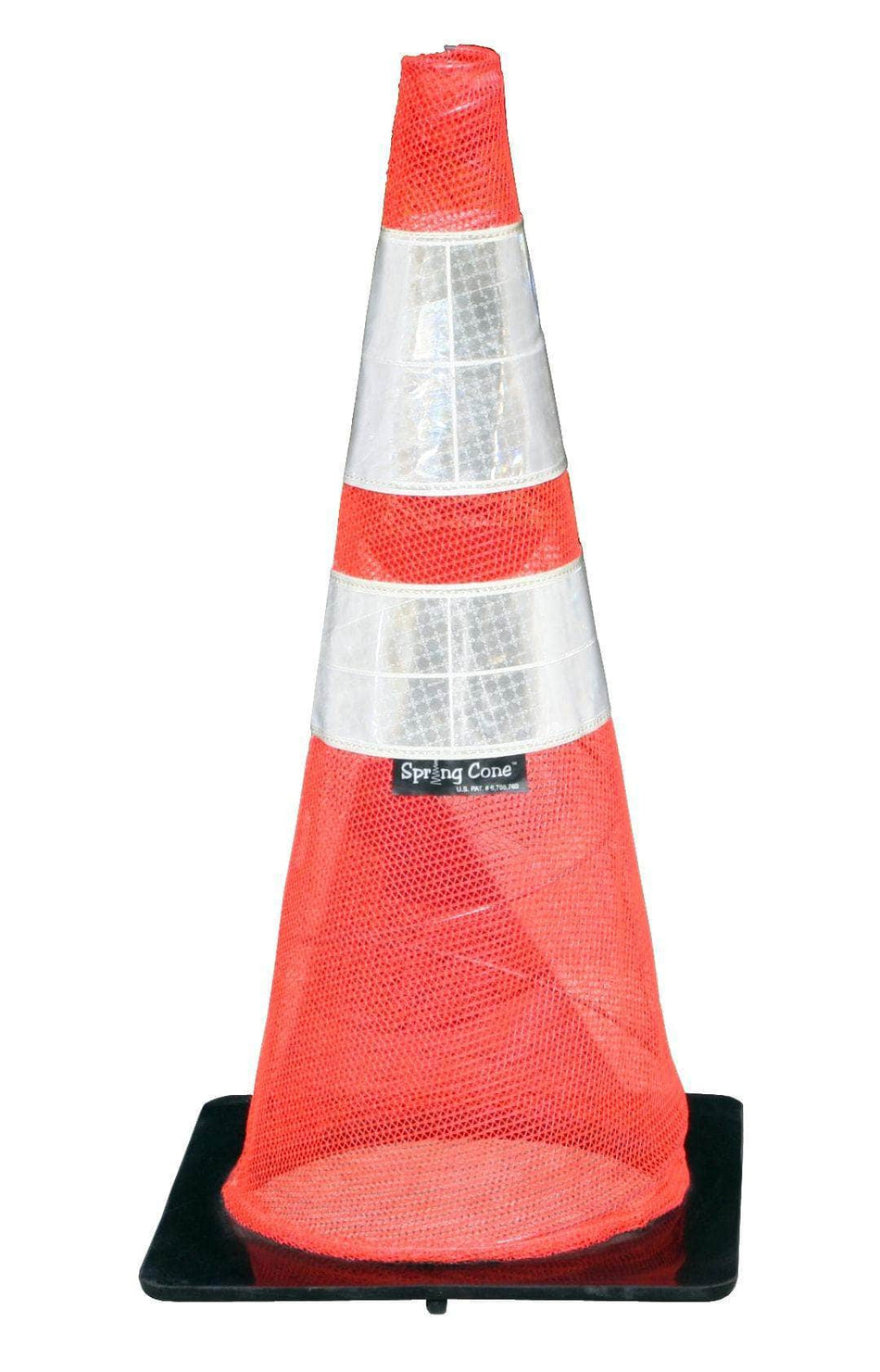
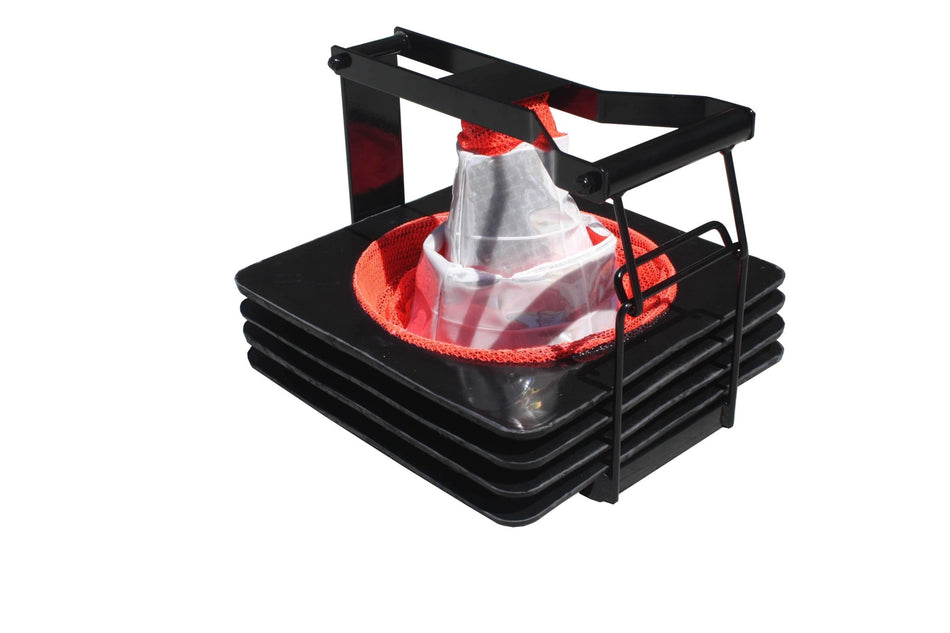
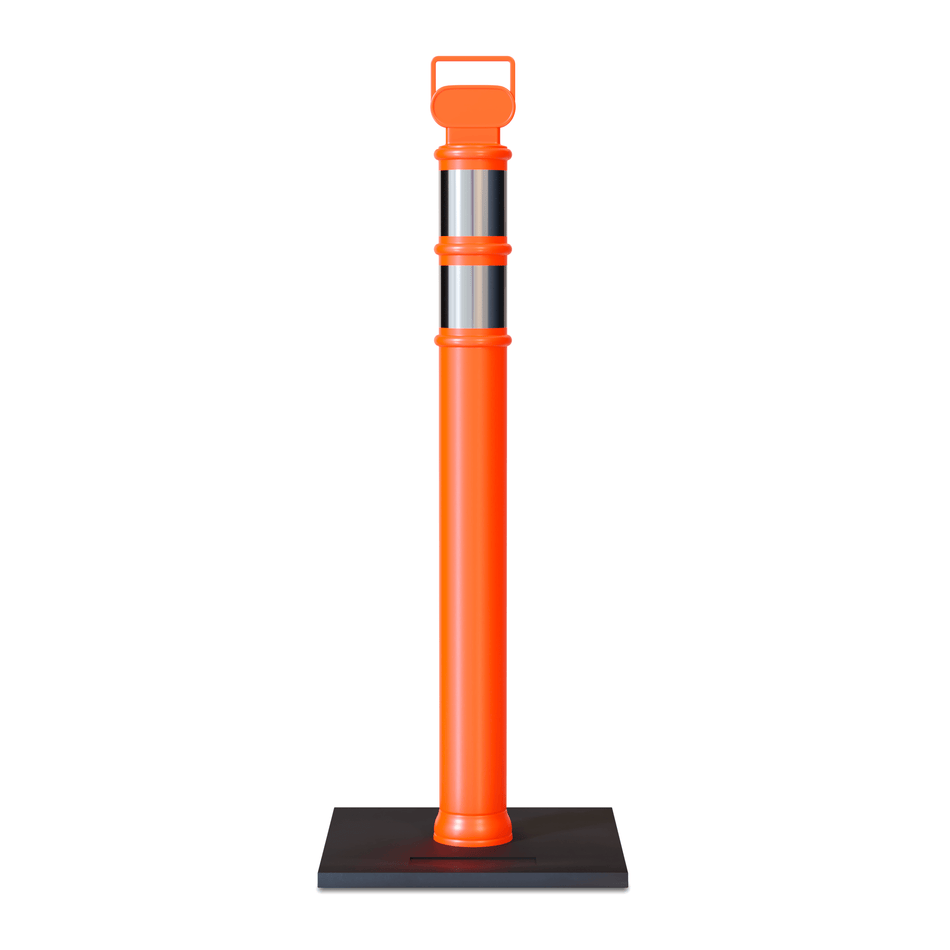
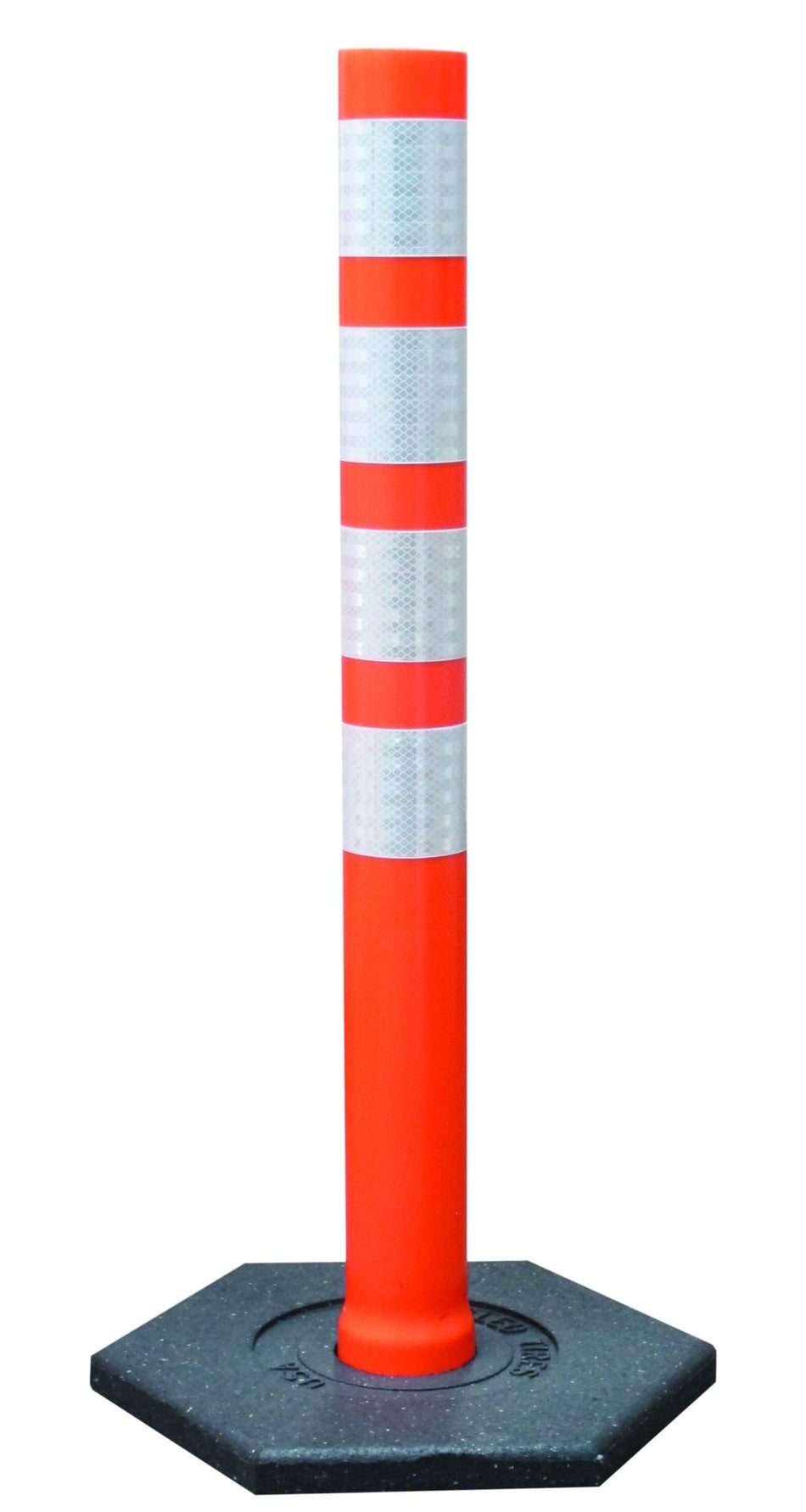
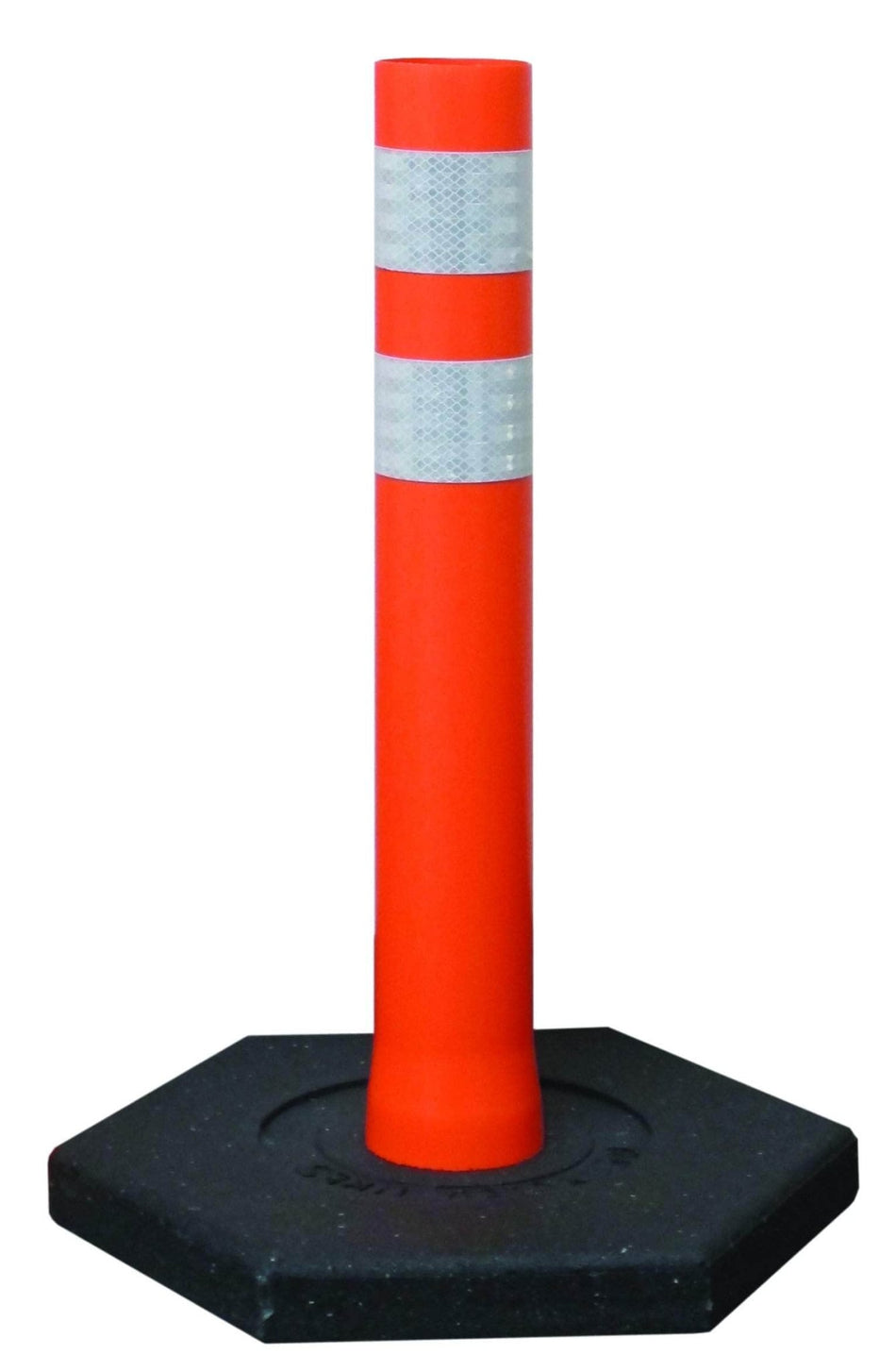
Traffic cones (also called road cones, construction cones, or safety cones) are the most widely deployed traffic control device in North America. They alert drivers and pedestrians to hazards, lane shifts, work zone boundaries, and temporary restrictions.
Sizes & When to Use Each
18" cones are used for pedestrian areas, parking lots, indoor applications, and low-speed environments (under 25 mph). Not suitable for highway or roadway use.
28" cones are the most common general-purpose size - required by MUTCD for roadways with speed limits up to 45 mph. One reflective band required, two bands recommended.
36" cones are required by MUTCD for roadways with speed limits 45–65 mph. Two reflective bands required. Standard for most state DOT work zone applications.
42" cones are for high-speed environments (65+ mph), nighttime work zones, and applications where maximum visibility is required. Two wide reflective bands required on most interstates and controlled-access highways.
Selecting the Right Cone Weight
Cone base weight ranges from 3 lbs (18") to 10–12 lbs (42"). Heavier bases resist wind displacement on highways. MUTCD requires cones to remain upright in normal wind conditions. For exposed highway use, choose cones with bases of 7 lbs or more.
FAQs
-
What size traffic cone do I need?
MUTCD specifies minimum cone heights by road speed: 18" for pedestrian areas and parking lots, 28" for roads up to 45 mph, 36" for roads 45–65 mph, and 42" for highways above 65 mph. When in doubt, use the next size up - larger cones are always acceptable where smaller ones are required.
-
What do the reflective bands on traffic cones mean?
Reflective bands (collars) are required by MUTCD for nighttime visibility. The number and width of bands varies by cone size: 28" cones require one 4" band, and 36"–42" cones require two 4" bands. High-intensity sheeting provides greater retroreflectivity for high-speed applications.
-
Are orange traffic cones required by law?
MUTCD requires that traffic control cones in temporary traffic control zones be fluorescent orange (or fluorescent red-orange). Other colors may be used for non-traffic applications - blue for water utility marking, green for general parking management - but only orange is MUTCD-compliant for roadway use.
-
How many traffic cones do I need for a lane closure?
MUTCD recommends cone spacing equal to the posted speed limit in feet (e.g., 45 mph = cones every 45 feet) in the taper zone. A standard single-lane closure taper on a 45 mph road requires approximately 10–15 cones, plus additional cones for the full-closure buffer zone.
-
Can traffic cones be used in rain or snow?
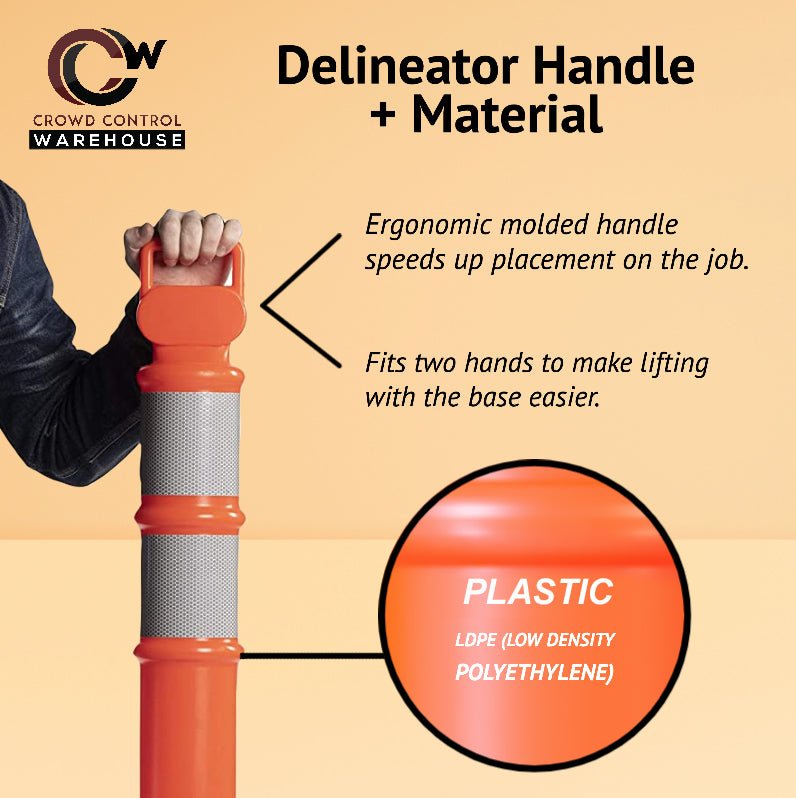
Yes - PVC and LDPE traffic cones are UV-stabilized and weather-resistant. In winter applications, consider cone delineators or heavier-gauge cones with larger base footprints to prevent tipping in wind or when brushed by snow plows.
-
What’s the difference between a traffic cone and a traffic drum?
Traffic cones are solid, lightweight, and portable - best for temporary lane delineation and short-duration work. Traffic drums (channelizing drums) are larger, hollow cylinders for longer-term work zones where greater lateral visibility is needed. Drums have a higher retroreflective area and are more visible from greater distances but take more space to store and transport.